01

What a chat widget adds

Chat commonly loads a launcher, vendor script, styles, fonts, network connections, and a larger application when opened. Some implementations also connect analytics or routing services.

The performance question is not whether chat exists. It is whether chat work competes with inventory, navigation and lead content before the shopper can use them.

What a chat widget costs, beyond its file size
CostWhy it is easy to missWhat to measure
Additional requestsThe first file loads more files, often from other hostsTotal requests and bytes attributed to the widget's domains
Main-thread timeExecution is counted separately from download, and is what delays a tapTotal blocking time attributed to the widget's scripts
Layout shiftThe launcher is injected after first paintThe widget's contribution to Cumulative Layout Shift
Connection setupEach new host needs its own DNS, TLS and connectionNumber of distinct third-party origins the widget introduces
A dealership page loading in two orders. In the first, third-party tools load ahead of the inventory, pricing and lead actions a shopper came for. In the second, the shopper-facing content is served first and the third-party tools follow.
A chat widget that loads before the inventory puts every shopper behind a tool most of them will never open.
02

What to measure

  • Requests and JavaScript executed before the launcher appears.
  • Long tasks that delay taps or inventory interactions.
  • Layout movement caused by late widget placement.
  • Time and behavior when the shopper intentionally opens chat.
  • Functionality across homepage, SRP, VDP and mobile navigation.
03

Optimize with safeguards

Establish when the launcher must be available, which resources are protected, and what happens if an optimization rule cannot be applied. A fail-open path should preserve the original site instead of trap the shopper behind optimization logic.

04

Validate the complete experience

Confirm the chat opens, routes correctly, accepts input, respects consent behavior, and remains usable with keyboard and touch. Compare page responsiveness before and after the change without publishing a universal chat-vendor judgment.

05

Why is chat usually the heaviest third party?

Chat widgets load early because vendors want the launcher visible immediately, they run continuously because they poll for agent availability, and they render an overlay before a shopper has expressed any interest in chatting. All three are choices made for the vendor's metrics instead of the page's.

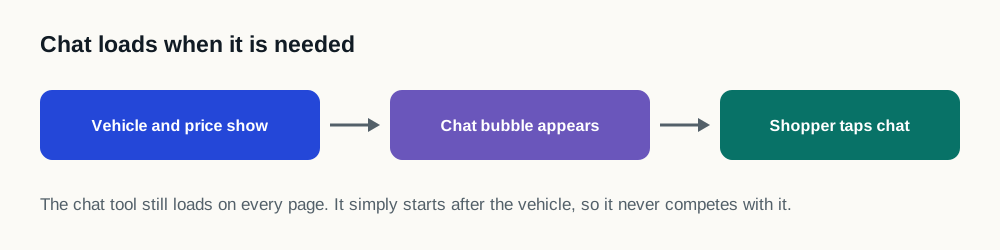
None of this means chat should be removed. It means chat should load after the content a shopper actually arrived for, which is the general case for every third-party tool on a dealer site.

06

How do I reduce chat's cost without losing conversations?

  1. 01

    Measure the current cost

    Find the chat vendor in your third-party breakdown and note the blocking time. That number is the size of the conversation you are about to have.

  2. 02

    Delay initialization

    Nobody starts a chat in the first second. Loading the widget after the main content costs nothing in conversations and returns the blocking time.

  3. 03

    Check for duplicates

    Dealerships frequently run two chat vendors simultaneously because one was added and the other never removed.

  4. 04

    Reserve the launcher space

    If the launcher pushes content when it appears, it is contributing to layout shift on every page view.

  5. 05

    Watch your own lead volume

    Through the change, not in theory. Your data settles the question for your site.

07

Why does chat cost more than its file size suggests?

Because the launcher is the smallest part of it. A typical implementation loads a vendor script, styles, fonts and a persistent network connection before anyone has clicked anything, and then loads a substantially larger application when the panel opens. Some implementations also connect continuously to check agent availability, which keeps work on the main thread throughout the visit instead of only at load.

Vendors quote the launcher size because the launcher size is defensible. The number that matters to a shopper is how much of the browser's attention the whole arrangement takes during the first few seconds of a visit, and that is usually an order of magnitude larger than the figure in the sales material.

None of which is an argument against chat. Chat converts, and a dealership that removes it to improve a score has made itself faster and poorer. The argument is only about ordering: the launcher does not need to be ready before the vehicle photographs and the price.

08

What should a dealership agree with its chat vendor?

Then verify the behavior instead of the agreement. Open the chat, route a real conversation, submit through it, and check it with a keyboard and on touch. Compare the responsiveness of the page around it before and after any change, because a chat widget that works perfectly while making inventory filters unusable has moved the problem instead of solved it.

  • When the launcher must be visible and interactive, stated in seconds instead of as 'immediately'
  • Which of the vendor's resources are protected from any timing change
  • What happens if a timing rule cannot be applied. The launcher should still appear
  • Whether proactive greetings and availability polling can start later than the launcher itself
  • How the vendor's own analytics distinguish a deferred load from a failed one

Sources and further reading

External sources support the general technical guidance on this page. They do not represent a DealerSpeed Engine performance result.