This guide is part of the dealer website speed resource library.
Why does speed matter more on paid traffic?
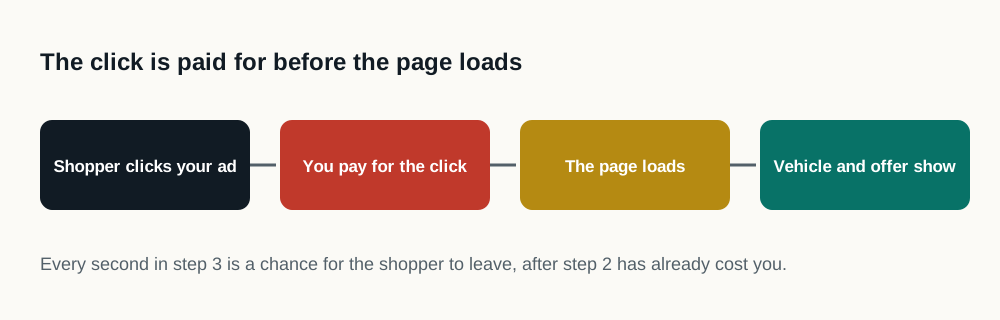
Because the click is already paid for. Organic traffic that leaves a slow page costs the dealership an opportunity; paid traffic that leaves a slow page costs the dealership an opportunity and the price of the click. The money is spent at the moment of the click, before the visitor has seen anything at all, which is the same reason every other paid and organic channel a dealership funds sends its results to this same website.
There is a second reason, which is that paid traffic rarely lands on the homepage. Campaigns point at model pages, inventory searches and specific vehicles, and those are the heaviest pages on a dealership website: the ones carrying the gallery, the pricing tools, the trade widget and the retailing stack all at once.
How does Google treat landing page speed?
Google describes landing page experience as one of the components that go into ad quality, and how quickly the page becomes usable is part of what that description covers. The published guidance is the place to read the current definition instead of a vendor's summary of it, and it is cited at the foot of this page.
What that means in practice for a dealership is that the landing page is not only where the money is spent, it is also an input to what the next click costs. Nothing here promises a specific effect on a specific account, that would require measuring the account, but the direction of the relationship is Google's own description instead of an inference.
Which pages should a dealership check first?
| Step | What to do |
|---|---|
| Pull the actual landing pages | From the ad account, not from memory. The list is usually shorter than expected and rarely matches the pages anybody tests. |
| Test them the same way | Mobile, field data first, repeated runs: the same procedure as any other speed test. There is no separate methodology for paid landing pages. |
| Note the tool stack per page | A model landing page and a vehicle detail page often carry different vendors. The page that costs the most per click is worth inventorying on its own. |
| Check the form path | A lead form that is slow to respond on a page reached by a paid click is the most expensive interaction on the website. |
| Compare against the site median | If the paid landing pages are the slowest pages on the site, the campaign is buying its own worst experience. |
What this does not claim
No number appears on this page about what speed does to cost per click, cost per lead or conversion rate for a dealership, and none will without a study on that dealership's own account that meets the published measurement standard. Those figures are quoted freely in this industry and almost none of them come from a controlled comparison.
Some things can be said without measuring anything. The click was paid for before the page loaded, the landing pages are usually the heaviest on the site, and Google states that landing page experience is part of ad quality. Those three are enough to justify testing the pages, which is the actual recommendation.
Sources and further reading
External sources support the general technical guidance on this page. They do not represent a DealerSpeed Engine performance result.