01

Choose representative vehicles

Test more than one VDP when inventory varies in image count, video, pricing, incentives, badges, or merchandising, following the page-by-page testing method. Record the VIN or URL and preserve the test date because inventory content can change.

What to record for each vehicle detail page tested
What to recordWhy it matters
New, used and certified examplesThe three usually run different templates and different tag sets
Photo countGallery weight is the largest single variable between two VDPs
Whether a payment or finance tool is presentDigital retailing is often the heaviest interactive element on the page
Whether a trade tool is presentIt usually adds its own third-party origin
Which incentives or badges renderThey frequently arrive from a feed after first paint
02

Measure the visible VDP

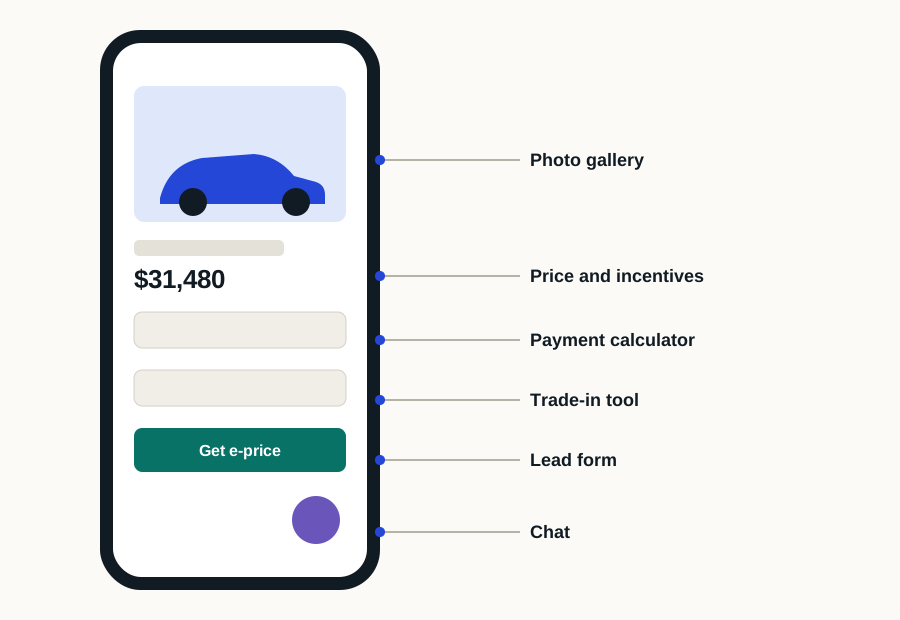
A vehicle detail page gallery loading. The first photograph is requested immediately at full priority, while the remaining photographs are requested only as the shopper approaches them.
The first gallery image is usually the page's Largest Contentful Paint element. The rest should not compete with it.
  • Primary vehicle image and gallery controls
  • Year, make, model, trim, price and availability context
  • Primary lead or purchase actions
  • Unexpected movement as media and tools arrive
  • Responsiveness of tabs, accordions and disclosures
03

Open every important tool

A closed launcher can have one performance profile and the opened application another. Test chat, trade, payment, digital retailing, credit, maps and lead forms far enough to verify their real dependencies.

04

Report the template honestly

Separate VDP observations from homepage and SRP results. State the device, connection, cache, vehicle, field-data scope, installed tool set, and limitations. Do not present one selected vehicle as a universal site result.

05

Why is the VDP the hardest page on a dealer website?

A vehicle detail page is where a dealership asks a shopper to do the most and gives the browser the most work at the same time. The page carries the largest media set on the site, usually twenty to forty photographs and often video. It carries pricing, incentives and availability, each of which may come from a different system, plus trade valuation, digital retailing, finance calculation, chat and at least two lead forms. And it is the page closest to a submitted lead, which means every delay on it is expensive in a way a delay on the homepage is not.

The combination is why a dealership can pass Core Web Vitals on its homepage and fail on the page that actually converts. Homepage-only testing is the most common measurement mistake in this industry, and it is not a small one: the templates behave differently enough that a homepage result tells you almost nothing about a VDP.

The same gap explains why VDP results vary between vehicles on the same site. A unit with eight photographs and no video behaves differently from one with forty and a walkaround, and a new-model page with an active incentive behaves differently from a used unit with none.

06

What should a VDP speed test actually record?

The useful output is not a score. The output is a description of when the page became usable, written specifically enough that the same measurement can be taken again in six weeks and compared.

  • The URL or VIN, so the same unit can be retested before it sells
  • Photograph count, whether video is present, and whether the gallery is lazy-loaded
  • When the primary vehicle image finished rendering, and which element the browser treated as the largest
  • When pricing and availability became visible, which is often later than the image
  • When the primary lead action first responded to a tap, not when it appeared
  • Whether anything moved after the page looked finished, and what moved it
  • Which third-party providers were present and how long each blocked the main thread
  • Device, connection, cache state, date and time of day
07

What usually goes wrong on a VDP?

Three patterns account for most of what we see. The first is gallery weight: full-resolution photographs delivered at display sizes far smaller than the file, multiplied by the number of images the template loads before the shopper has scrolled. The second is tool contention: trade, retailing and chat each initializing during the same window the gallery is downloading, so the main thread has nothing left for the shopper's first tap. The third is late insertion: an incentive banner, a compliance disclosure or a promotional overlay that arrives after the layout has settled and moves the price or the lead button as the shopper reaches for it.

None of those is fixed by changing the website platform, which is why replatforming is usually the wrong response to a slow VDP. All three are timing problems, and timing is available to any dealership without touching the platform, the design or the vendor relationships.

Sources and further reading

External sources support the general technical guidance on this page. They do not represent a DealerSpeed Engine performance result.