01

These tools change more than load time

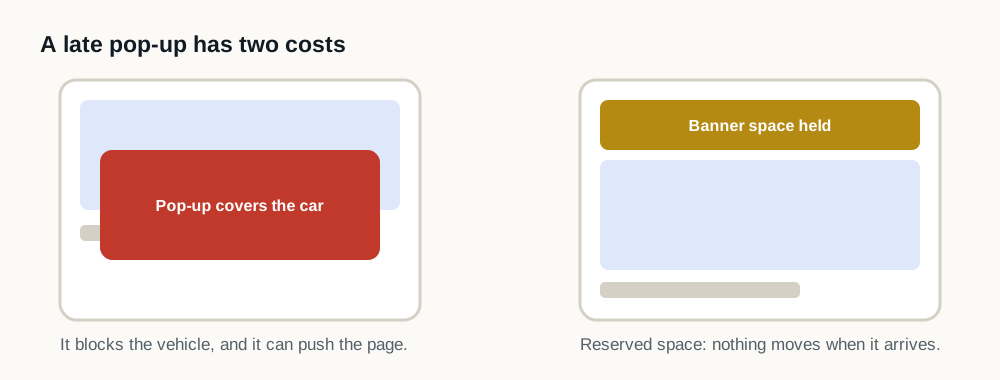
A late overlay can move content, trap focus, cover navigation, or interrupt a shopper mid-task. Accessibility and consent features may also depend on early page state.

02

Create a behavior checklist

Four ordered stages for changing the delivery of a consent, compliance or accessibility widget on a dealership website: document the complete behavior first, mark the required behavior as a protected constraint, change only the delivery, then re-verify focus, dismissal, scroll locking and mobile behavior on a real device. Optimizing before the behavior is documented is how a performance change becomes a legal problem.
The order to work in when changing how a compliance or accessibility widget loads. Documenting the behavior comes before touching the delivery, not after.
  • Trigger conditions and timing
  • Keyboard focus and escape behavior
  • Screen-reader labels and announcements
  • Scroll locking and mobile viewport fit
  • Consent persistence and expiration
  • Interaction with chat, trade and retailing overlays
03

Protect requirements

Document which resources and actions must remain early or untouched. Performance rules should be fail-open and reversible when a required dependency cannot be handled safely.

04

Measure stability and responsiveness

Use layout-shift and interaction diagnostics alongside visual and keyboard testing. A page that scores well but hides an active control under a late popup is not a successful shopper experience.

05

Which widgets can load later and which cannot?

Overlay widgets, by whether their timing can safely move
WidgetCan its loading be deferred?Why
Consent or privacy bannerNoIt must be present before anything it governs runs, or the site is non-compliant
Accessibility overlayNot a timing questionThe remedy is fixing the underlying markup; an overlay is not a substitute
Marketing pop-up or offer modalYesNothing depends on it and it is not needed for first paint
Chat launcherYes, to first interactionA shopper who never opens chat never needs the widget loaded
Survey or feedback promptYesIt is triggered by time or scroll, never by first paint
Three panels sorting the overlay technology on a dealership website. The first holds what cannot be deferred, such as consent behavior that has to fire before anything it governs. The second holds what can usually load later, such as promotional overlays and reputation widgets. The third lists the behavior that has to be re-verified after any change, whichever group a widget is in.
Overlay technology sorted by whether its timing can move, and the behavior that has to be re-verified either way.
  • Consent management, must run early for legal reasons; never delay it
  • Accessibility overlays, can usually load later; verify keyboard behavior after any change
  • Promotional pop-ups, rarely need to appear immediately
  • Review and rating widgets, can load on scroll; reserve their space either way
  • Exit-intent tools, by definition not needed at load
06

Why do overlays cause disproportionate damage?

Because they arrive late by design and they land on top of whatever the shopper is doing. A promotional overlay, a consent banner or an accessibility widget typically loads after the page has settled, which is precisely the moment a shopper has decided where to tap. The result is measured as layout shift or interaction delay and experienced as the site fighting back.

Overlay widgets also tend to be the least owned software on a dealership site. Consent tooling is installed once for a compliance reason and never revisited. Promotional overlays outlive the promotion. Accessibility overlays are frequently bought under time pressure and then left in place indefinitely.

The compliance-adjacent ones deserve particular care in any optimization work, because their failure mode is not slowness. It is a consent banner that never fires, which is a regulatory problem that a performance report will happily describe as an improvement.

07

What is the position on accessibility overlays?

Accessibility overlays are contested, and this site is not going to pretend otherwise. Overlay vendors argue they add remediation a site would not otherwise have. A substantial part of the accessibility community argues they do not deliver what is claimed and can interfere with the assistive technology a user already has configured. The disagreement is genuine and is not ours to settle.

What is not contested is the part a dealership can act on: semantic markup, real form labels, keyboard operability and sufficient color contrast work regardless of whether an overlay is present, cost nothing at runtime, and are what a conformance review actually examines. A dealership that fixes those has improved accessibility and page speed simultaneously, whatever it decides about the widget.

Sources and further reading

External sources support the general technical guidance on this page. They do not represent a DealerSpeed Engine performance result.