This guide is part of the dealer website speed resource library.
What does Google actually say about speed and SEO?
Google describes Core Web Vitals as real-world metrics for loading, responsiveness and visual stability. Its documentation recommends good Core Web Vitals for Search success and user experience.
Google also tells site owners to evaluate the complete page experience instead of focus on one or two signals.
What can website speed not prove?
- That a page will rank for a particular query
- That a score change caused an organic traffic change
- That every page on the domain has the same field experience
- That leads, conversion rate, or revenue will increase
How should dealers evaluate SEO impact?
Track technical performance by page template and device. Separately track impressions, rankings, clicks, landing pages, indexing and content changes. Mark platform releases, migrations, campaigns and inventory shifts that could affect either dataset.
What is the supportable claim?
DealerSpeed Engine makes dealership websites faster. Any search movement must be observed in the dealership’s own data and interpreted with the other changes that occurred during the same period.
What does a speed change realistically do for dealer search?
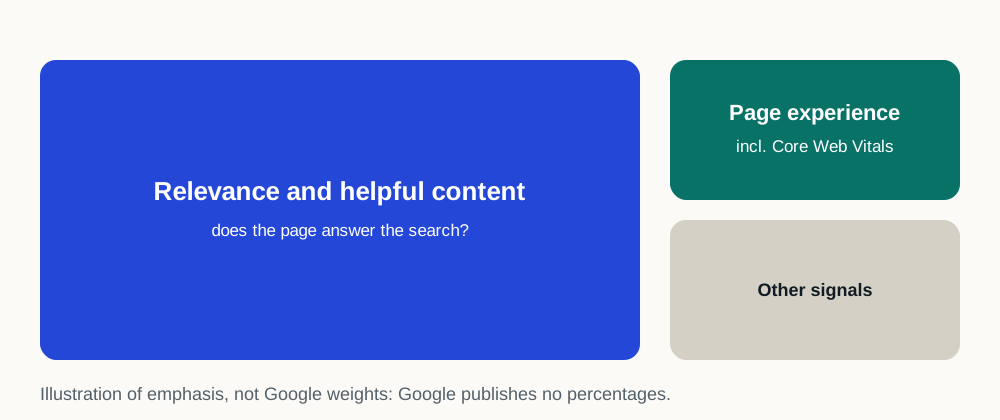
The honest answer is that it removes a disadvantage instead of creating an advantage. Page experience is one input among many, and Google has been explicit that relevance and content quality carry more weight. A dealership that is slow and has thin inventory pages does not fix its search problem by getting fast; it fixes one of two problems.
Where speed does earn its keep in search is indirectly and less controversially. A faster site is crawled more efficiently, which matters when a dealership publishes and retires several hundred vehicle pages a month. A faster site loses fewer shoppers between the search result and the page, which shows up in engagement instead of in rankings. And a faster site makes every other SEO investment work, because content nobody waits for is content nobody reads. The clearest version of the argument is not in organic search at all. It is in what a slow landing page does to traffic the dealership has already paid for.
None of that supports a promise. If someone in the building is telling a dealer principal that a speed project will produce a ranking increase, that promise will be judged later against data that cannot support it, and the speed work will get the blame.
How should a dealership separate speed from everything else?
Track the two datasets separately and mark the events that could move either. Technical performance belongs in one place, by page template and by device. Search outcomes, impressions, average position, clicks, landing pages, indexed page counts, belong in another.
Then keep a change log. Platform releases, template changes, inventory swings, manufacturer incentive periods, campaign starts and stops, and third-party tool additions all move at least one of those datasets, and a speed project that happens to coincide with a model-year changeover will get credit or blame for something it did not do. This is the same discipline the measurement methodology applies to product results, applied to search.
| Measurement | Answers | Does not answer |
|---|---|---|
| Lighthouse score | Whether a page has fixable technical problems under test conditions | What real shoppers experienced |
| Core Web Vitals field data | How eligible real visits performed over the last 28 days | Why, or which vendor caused it |
| Search Console position | Where pages appear for queries | Whether speed moved them |
| Concurrent control test | Whether the optimized experience differed from the original | Whether search will follow |
Sources and further reading
External sources support the general technical guidance on this page. They do not represent a DealerSpeed Engine performance result.